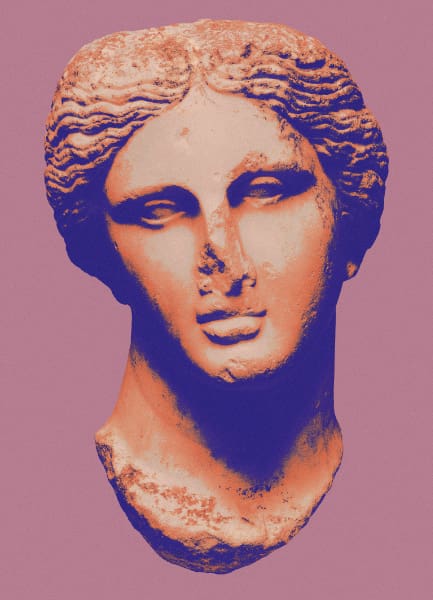
A mysterious tomb, an unsolved murder, a world in turmoil. In Ephesus, one of the most magnificent cities of the ancient world, Arsinoe, Cleopatra’s sister, was murdered and buried in 41 BC. But on whose orders was she killed, and what role did the political upheavals of the 1st century BC and AD play in this affair?
Around 100 years ago, Austrian archaeologists discovered an octagonal tomb in Ephesus containing a well-preserved skeleton. To this day, it remains unknown who was buried in this “octagon.” This spectacular discovery forms the starting point for this major exhibition, which explores the political and cultural transformations around the turn of the era—a historic turning point between the Egyptian, Greek, and Roman worlds, when power, politics, and culture were renegotiated between East and West.
Presented by the Kunsthistorisches Museum at the Neue Hofburg/Weltmuseum Wien, the exhibition brings togetheraround 100 sculptures, archaeological finds, mummy portraits, manuscripts, and magnificent cameos, ranking among the world’s most significant works of art in this field. In addition to the world-class collections of the Kunsthistorisches Museum, the objects comprise loans from, amongst others, the Metropolitan Museum of Art in New York, the British Museum in London, the Cleveland Museum of Art in Ohio, the Louvre in Paris, and the Staatliche Museen zu Berlin.